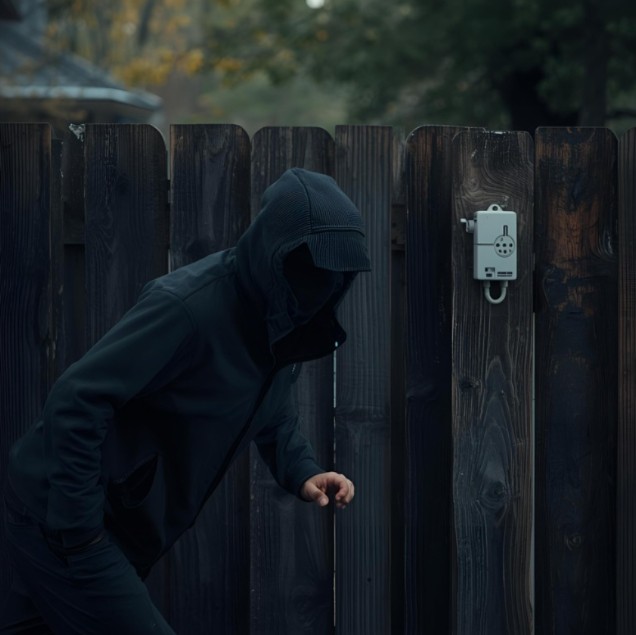
When people think about defending their home, they tend to jump straight to the dramatic scenario of a confrontation. But real home security is overwhelmingly about the layers that come before that, the deterrents and barriers that stop an intruder from ever getting in, or convince them to choose an easier target. The best home defense is the one where nothing ever happens, and a thoughtful, non-lethal, layered approach achieves exactly that for the vast majority of situations. This guide focuses on deterrence and non-lethal measures that keep your home and family safe without escalation.
Think in layers, from the street inward
Effective home security is built in concentric layers, each one an obstacle that deters, delays, or detects an intruder. The more layers, the less appealing your home is as a target, because burglars overwhelmingly seek easy, low-risk opportunities and move on from anything that looks difficult. The layers work from the outside in:
- The perimeter of your property: fencing, gates, and thorny landscaping that make casual access harder.
- The yard, where lighting and visibility remove the concealment intruders rely on.
- The home’s shell: solid doors, quality locks, and reinforced windows that resist entry.
- The interior, where alarms, safe rooms, and your own awareness form the final layers.
This layered thinking is the heart of a complete home security plan, and most of it is non-confrontational by design.
Deterrence: the most effective defense
The overwhelming majority of home security is deterrence, making your home look like too much trouble. These measures prevent incidents rather than resolving them, which is exactly what you want:
- Lighting. Well-lit exteriors and motion-activated lights remove the darkness intruders depend on, and few deterrents are cheaper or more effective.
- Visible security measures. Cameras, alarm signage, and the visible signs of an occupied, protected home push opportunists toward easier targets.
- A dog. Even a small dog that barks is one of the most effective burglar deterrents there is, providing early warning that no one can disable from outside.
- The appearance of occupancy. Timers on lights, a car in the driveway, and avoiding the vacation posts that advertise an empty home all signal that someone is present.
- Good locks and solid doors. Most break-ins exploit weak or unlocked doors and windows, so quality locks, reinforced strike plates, and the simple habit of locking up defeat a huge share of attempts.
Detection buys you the most precious resource: time
After deterrence, the next priority is early detection, because knowing about a threat as early as possible gives you time to react, whether that means calling for help, gathering your family, or getting to safety. Alarm systems, cameras, motion sensors, and a dog all serve this function of early warning. Time is the single most valuable thing in a security emergency: with enough warning, you have options, and without it, you have none. This is why detection layers matter so much, and why they pair so powerfully with the personal situational awareness that lets you notice trouble early. The earlier you know, the more calmly and effectively you can respond.
Non-lethal tools and a safe room
Should someone actually attempt entry, the priority is protecting your family, not confronting an intruder, and non-lethal options support that goal. Many households establish a safe room, typically a bedroom, with a solid door, a lock, a phone to call for help, and a plan for the whole family to gather there. The strategy is to retreat, secure, and call for help rather than seek confrontation. Non-lethal deterrent tools such as personal alarms and, where legal and appropriate, defensive sprays, can provide a means of protection while you get your family to safety. Whatever tools you choose, understand your local laws, and remember that the goal is always to protect and escape, not to engage.
A personal alarm that needs no battery and no permit

Affiliate note: buy through this link and ThisTracks may earn a small commission at no extra cost to you. We only list gear that is in stock and that we would carry ourselves.
Layers plus awareness plus community
The complete picture combines physical layers, personal awareness, and the people around you. Your situational awareness and OPSEC keep you from advertising vulnerability and help you notice trouble early. A watchful neighborhood where people look out for one another multiplies everyone’s security far beyond what any individual home can achieve. Layered deterrence, early detection, a retreat plan, and connected neighbors together create a home that is safe precisely because it is a difficult, unappealing target that nothing ever happens to.
Non-lethal home defense, condensed
- Build security in layers from the perimeter inward; more layers, less appeal.
- Deterrence prevents incidents: lighting, visible measures, a dog, good locks, occupancy.
- Detection buys time, the most valuable resource in any security emergency.
- Plan to retreat to a safe room and call for help, not to confront.
- Combine physical layers with awareness and a watchful community.
The safest home is not the one prepared to win a confrontation; it is the one that never has one, because its layers of deterrence and detection made it the target no intruder chose. Focus your energy on the non-confrontational measures that do most of the work, lighting, locks, visibility, a dog, awareness, and good neighbors, add a sensible retreat plan for the rare worst case, and you protect your family through prevention, which is safer and more effective than any confrontation could ever be.


